Homemade Sauerkraut
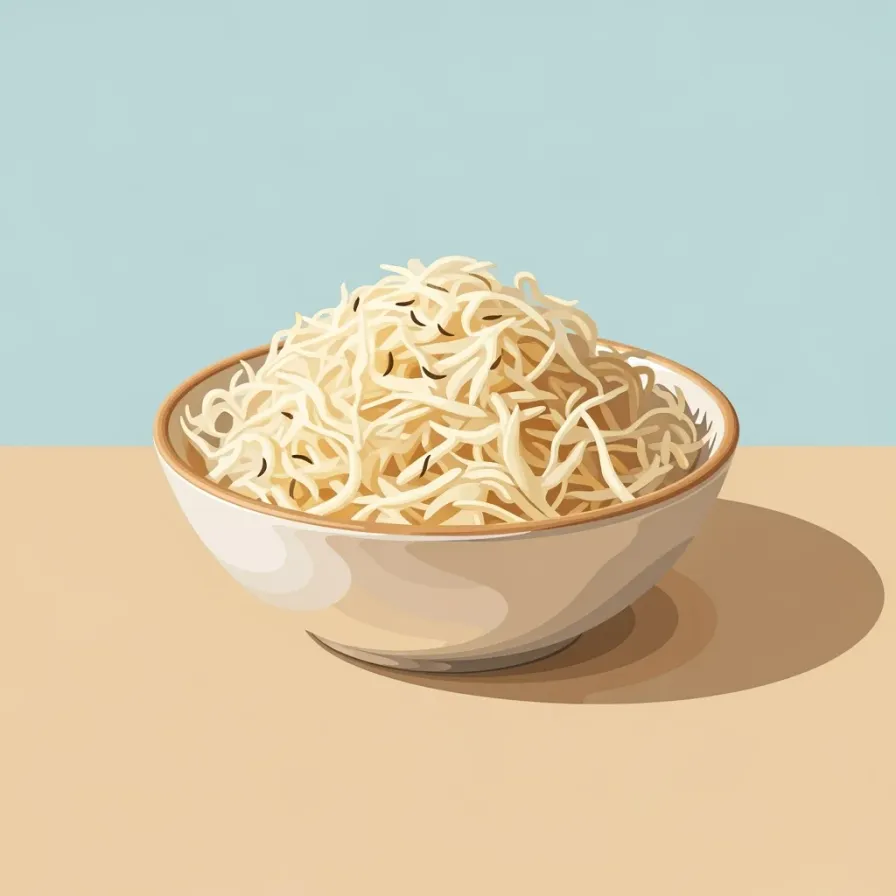
Ingredients
- • 2 kg green cabbage
- • 40 g sea salt
- • 10 g caraway seeds
- • 5 g juniper berries
Instructions
- 1
Remove outer leaves from cabbage and set aside 2-3 clean leaves for later. Quarter the cabbage and remove the core.
- 2
Using a sharp knife or mandoline, shred the cabbage into thin strips about 3mm thick.
- 3
Place shredded cabbage in a large mixing bowl and sprinkle with salt. Mix thoroughly with clean hands.
- 4
Massage and squeeze the cabbage for 5-10 minutes until it releases liquid and becomes limp. The cabbage should reduce in volume by about half.
- 5
Add caraway seeds and juniper berries if using, and mix well.
- 6
Pack the cabbage mixture tightly into clean glass jars, pressing down firmly with a wooden spoon or your fist to eliminate air pockets.
- 7
Pour any liquid from the bowl over the cabbage. The brine should cover the cabbage by at least 2cm. If needed, make extra brine with 15g salt per 500ml water.
- 8
Place reserved cabbage leaves on top to keep shredded cabbage submerged. Use a weight (like a smaller jar filled with water) to keep everything below the brine.
- 9
Cover jars with cheesecloth or coffee filter secured with rubber band. This allows fermentation gases to escape while keeping dust out.
- 10
Store at room temperature (18-22°C) away from direct sunlight for 3-4 weeks. Check daily for the first week, pressing down if needed.
- 11
Taste after 3 days, then every few days. When it reaches desired sourness, remove weights and leaves, seal with lids, and refrigerate.
- 12
Refrigerated sauerkraut will continue to ferment slowly and can last 6 months or more.
Nutrition (per serving)
Nutrition data is approximate and derived from OpenFoodFacts.org. Values may vary based on ingredients, brands, and preparation methods. Not intended as dietary or medical advice.
Chef's Note
"This traditional sauerkraut is wonderfully simple - just cabbage, salt, and time create that perfect tangy crunch. Don't be intimidated by fermentation; it's forgiving and deeply rewarding, transforming humble ingredients into a probiotic-rich condiment that elevates everything from sandwiches to grilled meats."